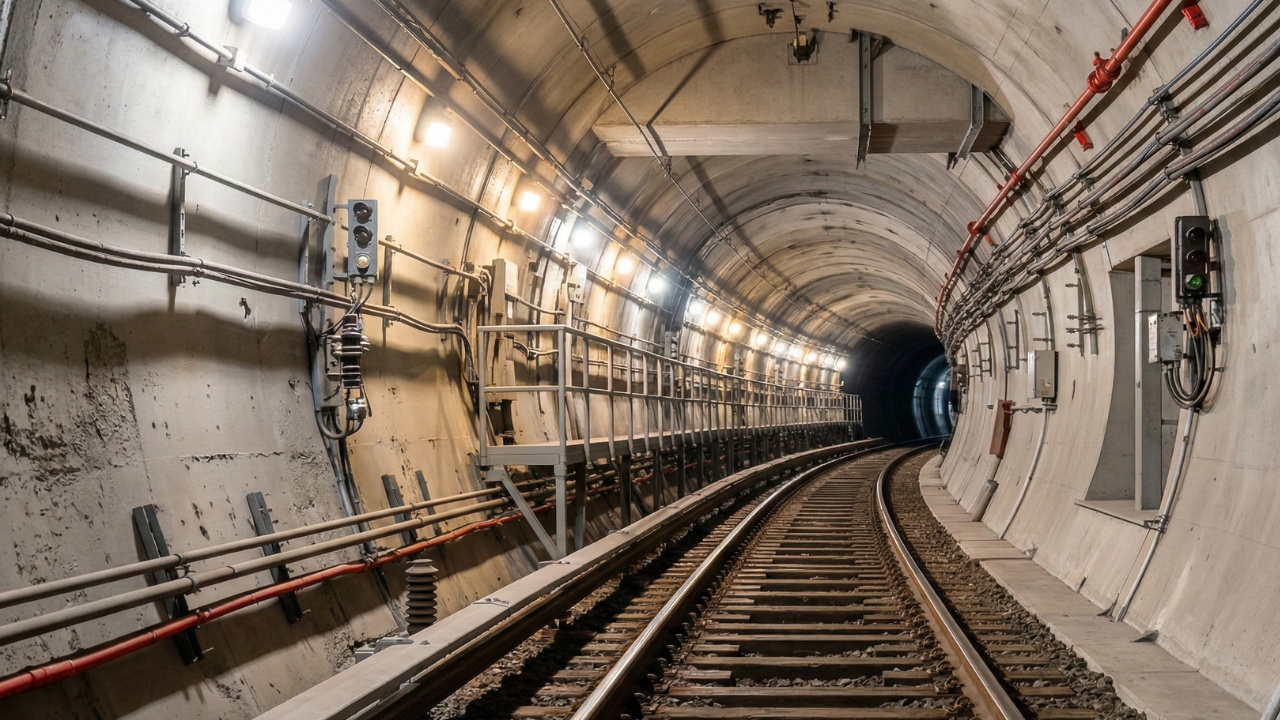
A tunnel emergency light has one job: turn on when everything else fails.
It may sit for years in extreme heat and vibration, with maintenance access limited to overnight windows. When a crisis hits, the battery either works or it doesn't. Underground, the way it fails matters. This whitepaper gives engineering, maintenance, and procurement teams a clear framework for evaluating the three battery chemistries used in tunnel emergency lighting: Nickel-Metal Hydride (NiMH), Nickel-Cadmium (NiCd), and Lithium Iron Phosphate (LFP).
Inside this whitepaper:
A side-by-side comparison of NiMH, NiCd, and LFP across thermal behavior, failure mode, system complexity, and end-of-life considerations
Why lithium-ion thermal runaway warrants extra scrutiny underground, with references from NFPA, NREL, and ATF research
How NiMH degrades gradually and predictably, giving maintenance teams warning rather than sudden failure
Ready-to-use evaluation checklists for current systems and future procurements
Guidance on bundling lighting upgrades with capital projects to reduce incremental costs
Download now for a referenced, practical framework for one of the most consequential decisions in tunnel fire-life-safety.